
Have you ever held a soft pastel stick and felt somewhat intimidated by its dusty vibrance? Or maybe admired pastel paintings with their dreamy textures and wondered, Could I ever do that? The good news is: yes, you absolutely can. Pastels are one of the most immediate, expressive, and beginner-friendly mediums — all you need is a few pointers on how to begin!
Here’s a short, practical guide to start your journey
What Are Pastels?
Pastels are pure pigment held together with a binder, rolled into sticks or pencils. They come in different types:
- Soft pastels – velvety, vibrant, and easy to blend. Ideal for expressive work.
- Hard pastels – firmer and better for certain types of detail or early underlayers.
- Pastel pencils – still firmer and more detailed, helpful for precision and targeted blending.
- Oil pastels – waxy and rich; not dry like the others, and more similar to crayons or oil paint.
For this guide, and the following posts, we’ll focus chiefly on soft pastels, the most common and painterly type.
Basic Equipment to Begin
Don’t be overwhelmed by art store shelves! You only need a few simple tools to begin:
1. A basic set of soft pastels
Start with an economy student set of 12 or 24 colors. Don’t splash out yet – you’ll scare yourself away from experimenting! I recommend starting with Inscribe, Reeves or Dayler-Rowney. Afterwards, Rembrandt would be a good step up. I started on Reeves for my first few experiments – exceedingly cheap, but useable for breaking the ice and trying things out. Then when I felt ready, I moved onto Rembrandt and enjoyed a noticeable difference.
You don’t need hundreds of colors — pastels blend beautifully through many different textural techniques, which we will explore later.
2. Pastel papers
Regular paper won’t hold pastel well. You need a paper that has “tooth” to it, or in less technical terms, one might describe it as grip or friction: a roughness that helps the paper hold on to more layers of pigment suitable for pastel painting.
There are good, better and best, but for the first budget experiments, I would personally recommend Dayler-Rowney Murano, which has a rag cotton base, holds a good few layers and is very affordable.
3. Masking Tape, Drawing Board, Fixative spray (optional at first)
Masking tape is cheap and useful for holding your paper still. Tape your paper by about 0.25 inch around the edge. When you’ve finished your painting, pull the tape gently off at a 90 degree angle from the picture, and you’ll find a beatifully neat edge left all around your finished work.
Fixative helps protect your finished work (depending on the paper used), but it isn’t essential when you’re just starting. It can have the effect of dulling the colors, and is best used only in earlier stages to fix layers: later, you’ll learn when and where it is best to use (or omit) fixative.
4. Blending tools
Your fingers work just fine. But not too far down the line, for wider effects and precision, you will want to make use of:
- Soft cloth or tissue
- Colour shaper or blending stump
5. An apron or old shirt
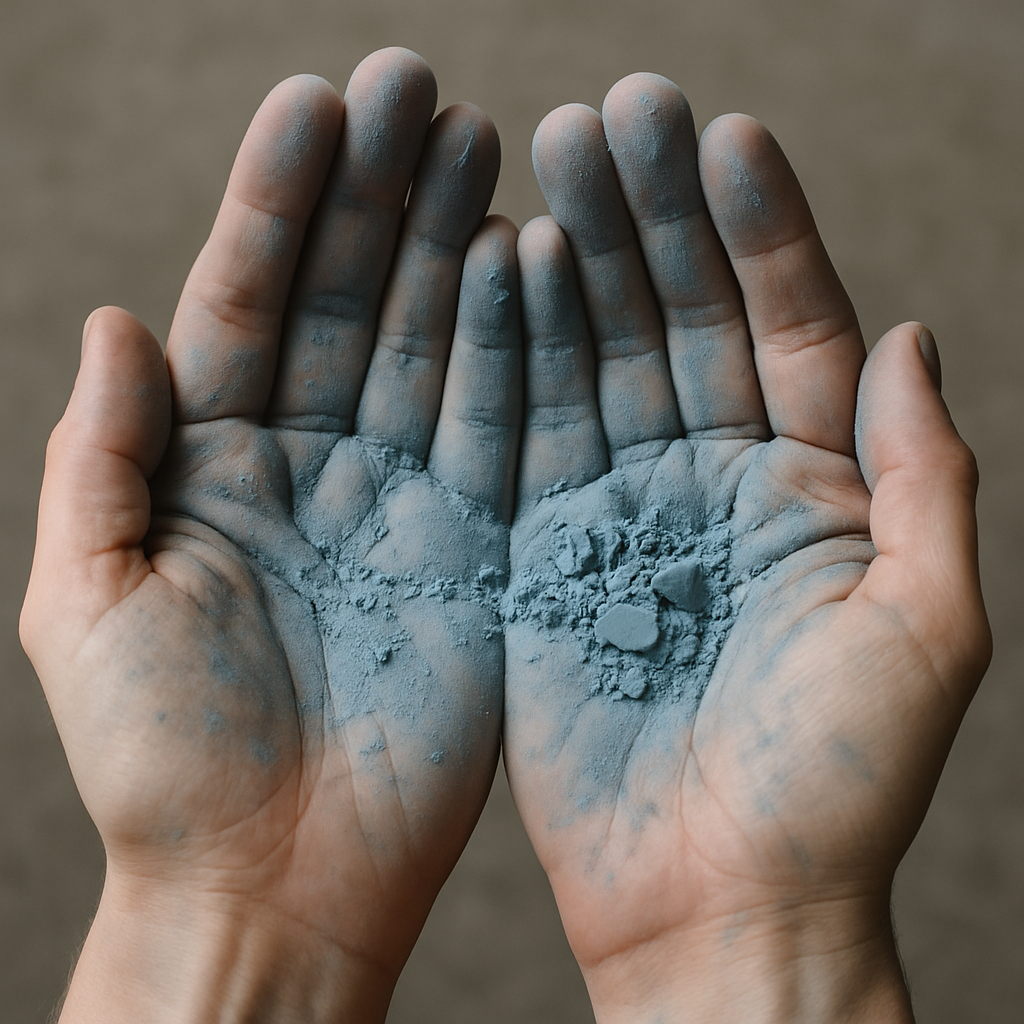
Pastels are dry and dusty — expect colorful fingertips and sleeves!
Bear in mind that pastel dust can spread somewhat unaccountably, so prepare your surrounding area (some rags or newspaper in your immediate radius, unless you’re in a studio or somewhere that doesn’t mind some eventual staining over time).
Starting your First Experiment
Choose a very simple subject
If this is your first time ever, try something that gives lots of free blending – even just a sky with gradations of blue. In later posts, I will give some more particular examples for you to observe. But for now, play around with something simple. Give yourself some freedom to make mistakes and experiment, start to get the basic feeling of the medium.
Draw by layers
Quite a few layers of pastel color can be placed one atop the other, creating depth of shade, interesting effects and new colors through surface blending. Experiment with layering to see the different effects you can produce. In later lessons, we’ll explore more specifically the texturing effects you can play with, such as stippling, scumbling and hatching.
Work from dark to light
This is a helpful rule of thumb for an opaque medium like pastels. Begin with the shadows and broad background tones before adding lighter tones and highlights. This keeps your picture clean and helps you to structure what you’re doing.
Layer and blend
Apply pastel in layers, gently blending with your fingers or tools. Don’t over-blend — let some grainy strokes breathe! They add interest and structure to your painting, as we will learn later.
Step back often
Pastels are immediate — step back frequently to see how it looks from a distance.
Stop before you overwork it
It’s tempting to keep going, but too many layers can muddy the colors. In these first stages, you are bound to create some “mud” as you learn the baby steps – that’s perfectly OK – learn from experience! Eventually, your intuition will grow as you get used to the medium and how different papers manage with different amounts and styles of layers.
Tips for New Pastel Artists
- Don’t try to be too meticulous: Pastels are sometimes at their best loose and can be quite spontaneous — lean into that!
- Enjoy happy accidents. Often you can learn from them. At times they even make the picture!
- Use light touches. Don’t press too hard — you’ll preserve the tooth (layer capacity) of the paper.
- Experiment. Try different surfaces, color palettes, and strokes. Every pastel artist develops their own touch.
- Store your artwork carefully. Use glassine or tracing paper between pieces, and store flat.
Why Choose Pastels?
Pastels are perfect for beginners because they offer instant color and feedback, require no drying time or brushes, allow you to draw and paint at once, and help you explore value, light, and form in a tactile way
Painting with pastels can feel like drawing with color itself. It’s quite forgiving and intuitive. But don’t try to achieve too much too soon. Give yourself a chance to feel and experiment with this medium – at this stage, there’s no need to aim for a masterpiece or even a fininshed work with every paper you use. You’ll find it very rewarding, and with patience, you’ll discover just how surprisingly versatile and controllable soft pastels can be.
