
Hudson River School and the Moral Landscape: Art as a Window to the Divine
In the tumult of the nineteenth century—an age awakening to industry and restless with ambition—there emerged an artist who turned not to man’s towers, but to the hills, the forests, and the hush of twilight valleys. Thomas Cole, the English-born founder of the Hudson River School, believed that landscape painting was not merely a decorative pursuit, but a moral calling—a way of awakening the soul to the eternal, through the transient beauty of the world.
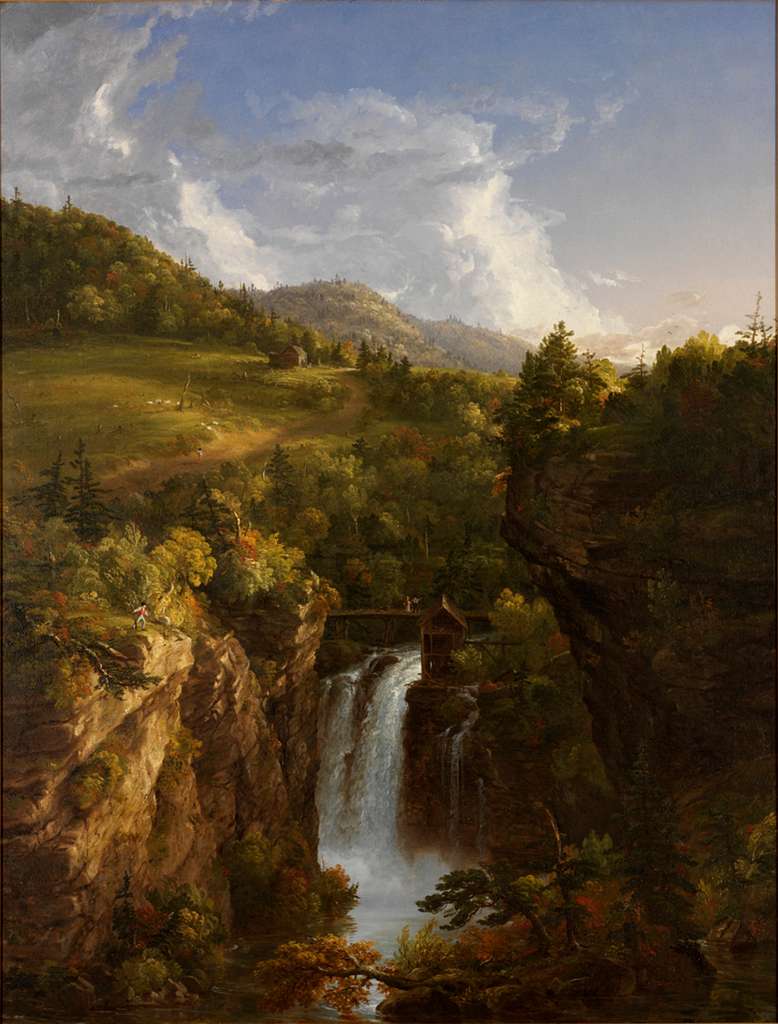
Cole did not mistake nature for God. He loved the American wilderness deeply—not as a god, but as a testament to the One who made it. In this, his view stood in stark contrast to the rising pantheism and romanticized nature-worship of his time. For Cole, nature was not divine, but divinely expressive: a visible language written by the Creator to stir the heart toward humility, awe, and right judgment.
This conviction imbued his canvases with more than aesthetic charm. Works like The Course of Empire were visual sermons: a five-part meditation on civilization’s rise and fall, warning against the idolatry of power and the forgetting of God, after the form and fashion of Babylon. The Voyage of Life, meanwhile, traced the spiritual journey of a soul from innocence to eternity, guided by angelic presence and framed by landscapes that echo the inner states of the heart.
Unlike many artists, Cole saw art not as self-expression, but as moral expression—an offering meant to awaken longing for the good, the true, and the beautiful. His landscapes are not escapist fantasies, but windows into a reality charged with meaning.
Even in his quietest scenes—an autumn glen, a still lake beneath a swelling sky—there is always a sense that nature is more than scenery. It is a stage for spiritual encounter, a gentle yet insistent reminder that man lives not by bread or machinery alone, but by wonder, by conscience, and by grace.
Cole stands as a reminder to the artist of faith today: that beauty is not trivial, and the created world is not mute. Through the attentive eye and the obedient brush, we may still help others glimpse the eternal behind the ordinary—not as pantheists, but as pilgrims who behold the mirror of the Hand of a Maker.

Leave a comment